Archives: TIDC Projects

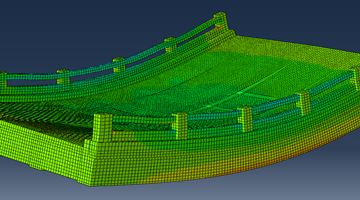
Image of Typical Finite-Element Model

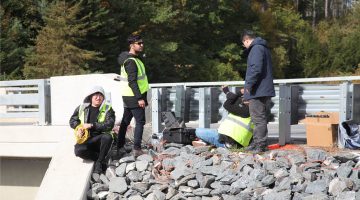
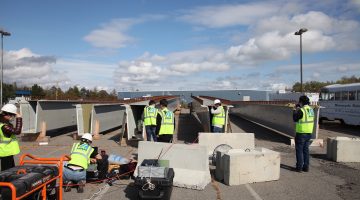
Project 1.01: Field Live Load Testing and Advanced Analysis of Concrete T-Beam

Field Live Load Testing and Advanced Analysis of Concrete T-Beam Bridges to Extend Service Life Project 1.1 Project Summary Concrete T-beam bridges are an important class of structures that has seen limited investigation. These structures are often perceived as quite robust and are in good condition, but possess very low rating factors based on conventional […]

Read more
project 1.2 featured image

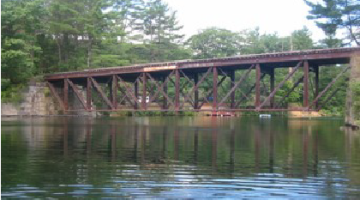
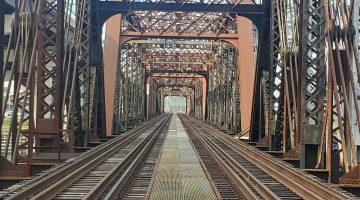
Project 1.02: Condition/Health Monitoring of Railroad Bridges for Structural Safety, Integrity, and Durability

Condition/Health Monitoring of Railroad Bridges for Structural Safety, Integrity, and Durability Project 1.02 Project Summary The primary goal of this research project is to develop and implement efficient and effective methodology for short-and long-term continuous condition monitoring and detection of railroad bridges. This is proposed to be achieved utilizing analytical and computational (finite element) modeling/analysis […]

Read more

1.4 cover image

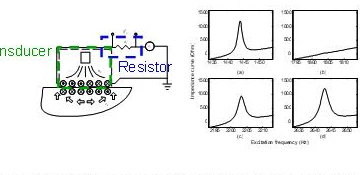
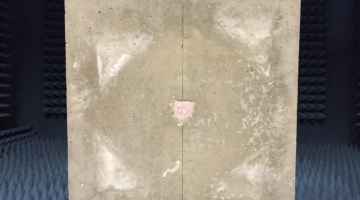
Project 1.04: Electromagnetic Detection and Identification of Concrete Cracking in Highway Bridges

Electromagnetic Detection and Identification of Concrete Cracking in Highway Bridges Project 1.04 Project Summary The problem we are trying to solve is the structural assessment of aging concrete bridges (reinforced and pre-stressed) in New England, targeting at concrete cracking and degradation (e.g., carbonation, alkali-silica reaction). The problem is important because that the integrity of concrete […]

Read more

1.5 cover image

Project 1.05: Distributed Fiber Optic Sensing System for Bridge

Distributed Fiber Optic Sensing System for BridgeMonitoringracking in Highway Bridges Project 1.5 Project Summary The deterioration of infrastructure presents a major challenge for the economy of any country. Additionally, the risk factor of possible loss of life has made Structural Health Monitoring (SHM) an important approach to evaluate the status of any civil infrastructure. Among […]

Read more

cover image for 1.6

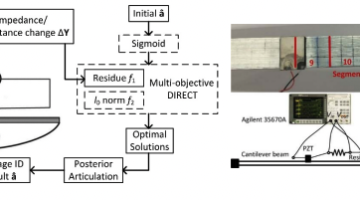
Project 1.06: Progressive Fault Identification and Prognosis of Railway Tracks Based on Intelligent Inference

Progressive Fault Identification and Prognosis of Railway Tracks Based on Intelligent Inference Project 1.6 Project Summary The objectives of this project are to synthesize novel sensors integrated with physics-informed data analytics to monitor the railway track for enhanced reliability and durability. New active sensing mechanisms will be developed, to enable autonomous detection and identification. New […]

Read more

1.08 cover image

Project 1.08: Enhancing Intelligent Compaction with Passive Wireless Sensors

Enhancing Intelligent Compaction with Passive Wireless Sensors Project 1.08 Project Summary To ensure long lasting performance of pavement materials and avoid significant maintenance and rehabilitation costs, it is necessary to achieve high quality and uniformly compacted materials. In this project, we aim to improve the IC performance and facilitate the process of geo-material compaction and […]

Read more

project 1.11 cover image

Project 1.11: Energy Harvesting and Advanced Technologies for Enhanced Life

Energy Harvesting and Advanced Technologies for Enhanced Lifentelligent Compaction with Passive Wireless Sensors Project 1.11 Project Summary The objectives of this project are:• to develop a perpetual pavement system with embedded solar harvesting unit• to perform Infrastructure Assessments Through Solar Energy Harvesting• to perform a thermodynamic analysis of the pavement cooling system and the pavement […]

Read more

1.12 Cover Image

Project 1.12: Improved UAV-Based Structural Inspection Techniques and Technologies for Northeast Bridges

Improved UAV-Based Structural Inspection Techniques and Technologies for Northeast Bridges Project 1.12 Project Summary Unmanned aerial vehicles (UAVs) or “drones” are revolutionizing some basic reconnaissance, including structural inspections. This project seeks to enhance and expand the range of applications for unmanned aerial vehicles (UAVs) to aid inspection of transportation structures. This project is primarily aimed […]

Read more

1.13 cover image

Project 1.13: Structural Integrity, Safety, and Durability of Critical Members and Connections of Old Railroad Bridges under Dynamic Service Loads and Conditions

Structural Integrity, Safety, and Durability of Critical Members and Connections of Old Railroad Bridges under Dynamic Service Loads and Conditions Project 1.13 Project Summary Most of the New England railway bridges were designed and built more than a century ago with outdated design codes and materials. The objective of this research project is to investigate […]

Read more

Project 1.14: Exploring the Safety Impact of Rumble Strips on Prevention of Lane Departure Crashes in Maine

Exploring the Safety Impact of Rumble Strips on Prevention ofLane Departure Crashes in Maine Project 1.14 Project Summary Enhancing safety of roadway segments is a critical step towards maintaining durable transportation infrastructures. Due to significant costs associated with construction of roadway segments, redesigning or rebuilding a roadway segment is not always a viable solution for […]

Read more

1.15 cover image

Project 1.15: Non-Contact Intelligent Inspection of Infrastructure

Non-Contact Intelligent Inspection of Infrastructure Project 1.15 Project Summary The objective of this research is to develop non-contact sensing mechanism for infrastructure monitoring as well as the associated machine-learning based technique for decision making. Currently available sensory systems for structural health monitoring are almost all based on transducers that are directly attached to or embedded […]

Read more

1.16 cover image

Project 1.16: Wireless Joint Monitoring System (w-JMS) for Safety of Highway Bridges

Wireless Joint Monitoring System (w-JMS) for Safety of Highway Bridges Project 1.16 Project Summary The objective of this research project is to develop and deploy a long-term wireless monitoring system on a highway bridge’s expansion joint systems considering environmental factors. Principal Investigator:Dr. Shinae Jang Co-PIs Dr. Song HanDr. Ramesh Malla Institution:University of Connecticut Project:Complete Start […]

Read more

1.17 cover image

Project 1.17: Determining Layer Thickness and Understanding Moisture Related Damage of State-Owned Roads Using GPR and Capturing Such in a GIS-Based Inventory

Determining Layer Thickness and Understanding Moisture Related Damage of State-Owned Roads Using GPR and Capturing Such in a GIS-Based Inventory Project 1.17 Project Summary The Rhode Island Department of Transportation (RIDOT) has a significant inventory of state-owned roads of which layer thickness and moisture related damage is uncertain. Discrete methods of assessment like coring and […]

Read more

Project 1.20: Monitoring Rail Bed Infrastructure Using Wireless Passive Sensing

Monitoring Rail Bed Infrastructure Using Wireless Passive Sensing Project 1.20 Project Summary Assessment and monitoring the performance and health of rail structures is an essential aspect of prioritizing the repair and replacement, as well as extending service life, of these transportation infrastructures. Intrusion of fines from the subgrade or surface leads to ballast fouling and […]

Read more

Project 1.21:Efficient and Cost-effective Rating of Critical Members of Steel Truss Railroad Bridges Supported by Field Test Data

Efficient and Cost-effective Rating of Critical Members of Steel Truss Railroad Bridges Supported by Field Test Data Project 1.21 Project Summary With the current rate of infrastructure aging, the railroad bridges have been placed in the second plan for immediate replacement. However, highway and energy resources have shown a great need for prioritized capital investment. […]

Read more

Project 1.22: Machine Learning Enabled Information Fusion of Heterogeneous Sensing for Infrastructure Monitoring

Machine Learning Enabled Information Fusion of Heterogeneous Sensing for Infrastructure Monitoring Project 1.22 Project Summary In this proposed research, we plan to develop a framework for machine learning enabled information fusion of heterogeneous sensing for infrastructure health monitoring. Traditionally, off-the-shelf sensors such as accelerometers and strain gages have been used to collect real-time measurements of […]

Read more

Project 1.23: Wireless Joint Monitoring for Large Movement Expansion Joints for Highway Bridge Resilience

Wireless Joint Monitoring for Large Movement Expansion Joints for Highway Bridge Resilience Project 1.23 Project Summary The primary objective of the proposed engineering project is to monitor a large movement expansion joint of a multi-span highway bridge using the developed real-time wireless sensor system from the previous project. This project will upgrade the current wireless […]

Read more

2.02 cover image

Project 2.02: Concrete Systems for a 100-Year Design Life

Concrete Systems for a 100-Year Design Life Project 2.02 Project Summary The overall objective is to develop a suite of highly durable concrete systems suitable for a range of transportation infrastructure applications, given the range of constituent availability (e.g. appropriate aggregates, supplementary cementitious materials), conventions for structural details, and typical New England exposure conditions ranging […]

Read more

Project 2.03: Measuring Adhesion Between Binders and Aggregates Using Particle Probe Scanning Force Microscopy at Low Temperatures

Measuring Adhesion Between Binders and Aggregates Using Particle Probe Scanning Force Microscopy at Low Temperatures Project 2.3 Project Summary Low temperature cracking is one primary distress of pavement materials in New England area. It is estimated that only half of the major US roads are in good condition, whereas thirteen percent are in poor condition. […]

Read more

2.5 cover image

Project 2.05: Development and Testing of High/Ultra-High Early Strength Concrete for Durable Bridge Components and Connections

Development and Testing of High/Ultra-High Early Strength Concrete for Durable Bridge Components and Connections Project 2.5 Project Summary The objective of the research project is to enhance the robustness of current high-early strength concrete mixtures and develop mixture design specification of a next generation of high-early strength concrete to enable durable, sustainable and economical efficient […]

Read more

2.07 cover image

Project 2.07: High Performance Concrete with Post-Tensioning Shrinking Fibers

High Performance Concrete with Post-Tensioning Shrinking Fibers Project 2.07 Project Summary This research improves upon the technique of reinforcing concrete with dispersed fibers by having the fibers axially shrink after curing to produce a dispersed multi-axial post-tensioned state. Such reinforcing may increase the crack resistance and durability of the concrete. Preliminary benchtop testing with natural […]

Read more
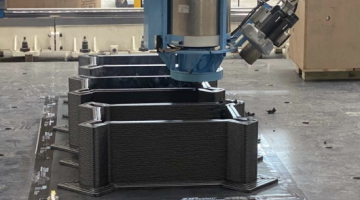
Image of large container of soil holding its shape as one wall of container is removed

Project 2.09: Carbonating Subgrate Materials For In Situ Soil Stabilization

Carbonating Subgrade Materials for In Situ Soil Stabilization Project 2.09 Project Summary Ground improvement is the in situ alteration of the ground’s material properties, with the ultimate goal of strengthening, stiffening, and/or altering drainage characteristics to benefit design, construction, and performance of civil infrastructure. Carbonation is a process by which carbon dioxide (CO2) gas reacts […]

Read more

Image of Penobscot Narrows suspension bridge

Project 2.10: Durability Evaluation of Carbon Fiber Composite Strands in Highway Bridges

Durability Evaluation of Carbon Fiber Composite Strands in Highway Bridges Project 2.10 Project Summary The objectives of this project are to monitor the structural performance of carbon fiber composite cable (CFCC) strands in the Penobscot Narrows Bridge, a cable-stayed bridge, to evaluate long-term durability, and to assess durability of carbon fiber reinforced polymer (CFRP) strands […]

Read more

2.13 cover image

Project 2.13: Performance Structural Concrete Optimized for Cost, Durability and Manufacturability

Performance Structural Concrete Optimized for Cost, Durability and Manufacturability Project 2.13 Project Summary The primary goal is to develop prescriptive concrete mix designs that meet modern high- performance durability requirements while being practical to manufacture with New England-sourced materials and suppliers. These new Performance Concrete or High Performance Concrete (HPC) mix designs use graded aggregates, […]

Read more

2.14 cover image

Project 2.14: Implementation of UHPC Technology into the New England Construction Industry

Implementation of UHPC Technology into the New England Construction Industry Project 2.14 Project Summary The proposed research aims at the development and implementation of cost effective non-proprietary high and ultrahigh performance concrete (UHPC) mix designs. Research emphasis is being placed on testing and analysis of durability properties of promising UHPC mixtures, as well as testing […]

Read more

2.15 cover image

Project 2.15: Incorporation of Pollinator Plantings to Enhance Ecosystem Functions and Durability of Transportation Right-of-Way Infrastructure

Incorporation of Pollinator Plantings to Enhance Ecosystem Functions and Durability of Transportation Right-of-Way Infrastructure Project 2.15 Project Summary Highway right-of-ways (ROWs) provide numerous ecosystem services beyond erosion control. Incorporation of native grasses and flowering plants into ROW plantings can further increase the services by providing habitat for endangered native pollinators while improving aesthetics, erosion control, […]

Read more

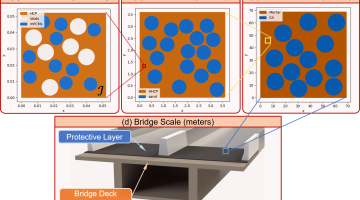
Project 2.16 Cover Image, three graphs and a model of a bridge part

Project 2.16: Enhancing the Durability of Bridge Decks by Incorporating Microencapsulated Phase Change Materials (PCMs) in Concrete

Enhancing the Durability of Bridge Decks by Incorporating Microencapsulated Phase Change Materials (PCMs) in Concrete Project 2.16 Project Summary In Rhode Island and other New England states, combined effects of freeze-thaw-induced damage and chloride ingress (from deicing salts) make it very challenging to maintain the quality of concrete on bridges and road surfaces. This project […]

Read more

2.17 cover image

Project 2.17: Design and Development of High-Performance Composites for Improved Durability of Bridges in Rhode Island

Design and Development of High-Performance Compositesfor Improved Durability of Bridges in Rhode Island Project 2.17 Project Summary Transportation infrastructure is the backbone of our economy. But the current condition of America’s deteriorating transportation infrastructure network has raised serious concerns on safety, quality of life, and economic impacts. According to the recent American Society of Civil […]

Read more

2.18 cover image

Project 2.18: Recycling Large-Scale 3 D-Printed Polymer Composite Precast Concrete Forms

Recycling Large-Scale 3 D-Printed Polymer Composite Precast Concrete Forms Project 2.18 Project Summary Large-scale thermoplastic composite extrusion-based 3D printing has been used in research labs and is moving into industry. One significant use of large-scale 3D printing has been to make forms for manufacturing precast concrete parts. Once the forms have been used for casting […]

Read more
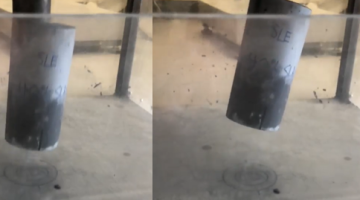
Project 2.20: Efficiency of Fiber Reinforcement in Ultra-high Performance Concrete

Efficiency of Fiber Reinforcement in Ultra-high Performance Concrete Project 2.20 Project Summary The proposed research aims at investigating the efficiency of fiber reinforcement in ultra-high performance concrete (UHPC) mixtures. This proposed research is a necessary step for the successful completion of the development of non-proprietary UHPC mixtures. Since fiber reinforcement is the most expensive part […]

Read more
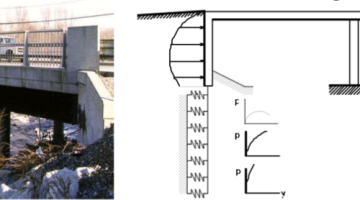
Project 2.21: Mineralogical Characterization of Pavement Aggregates in Maine

Mineralogical Characterization of Pavement Aggregates in Maine Project 2.21 Project Summary Paving represents a significant cost for transportation infrastructure in the State of Maine. With a low population density and high road density, the State of Maine has significant paving needs. The adverse climate conditions across the diversity of environmental conditions in the state leads […]

Read more
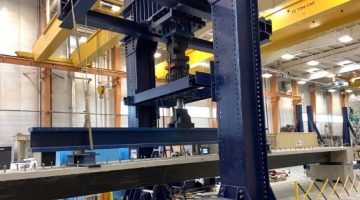
Project 2.25 Durability of Thermoplastic Rebars Used in Reinforced Concrete Structures

Durability of Thermoplastic Rebars Used in Reinforced Concrete Structures Project 2.25 Project Summary The objective of this study is to study the durability of thermoplastic composite (TC) rebars. The end-use of thermoplastic rebars is as reinforcements in concrete structures. This research work focuses on the effects of moisture, alkaline exposure, and seawater wetting and drying […]

Read more
3.5 cover image

Project 3.05: Prevention of Stressed-Induced Failures of Pre-stressed Concrete Crossties of the Railroad Track Structure: Phase I

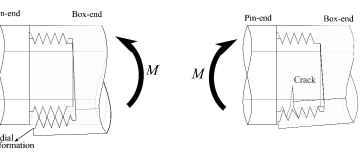
Prevention of Stressed-Induced Failures of Pre-stressed Concrete Cross-ties of the Railroad Track Structure: Phase I Project 3.05 Project Summary The problem we are trying to solve is to understand and mitigate premature failures of pre-stressed concrete cross-ties (PSCCs), which are an essential structural component of a railroad track structure. The objectives of the project are […]

Read more
Project 3.06: Optimal Design of Sustainable Asphalt Mixtures with RAP

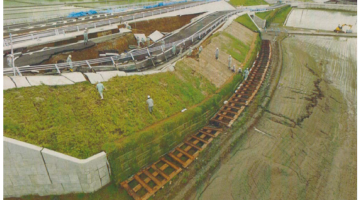
Optimal Design of Sustainable Asphalt Mixtures with RAP Project 3.6 Project Summary Current proposal seeks to derive guiding approaches for extracting, through the literature, the promising opportunities for designing asphalt pavements with enhanced levels of reclamation and for capitalizing on such opportunities. To this end, the study proposes a framework for gauging and comparing, within […]

Read more
Project 3.07: Development of general guidelines related to the effects of factors such asthe bridge span range, range of pile length, roadway profile grade,and skew angle range on integral abutment bridges (IABs)

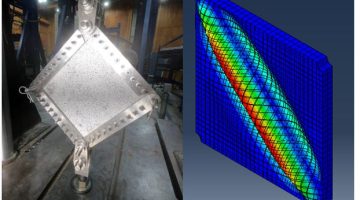
Development of General Guidelines Related to the Effects of Factors Such as the Bridge Span Range, Range of Pile Length, Roadway Profile Grade, and Skew Angle Range on Integral Abutment Bridges (IABs) Project 3.07 Project Summary The overall objective of this research is to improve the guidelines for the modeling, design, and construction of integral […]

Read more

3.10 cover image

Project 3.10: Assessment and optimization of double CT bridge girder sections with longitudinal precast decks

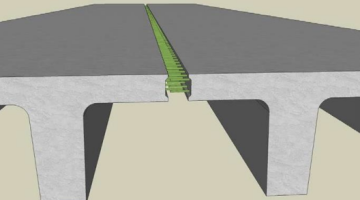
Assessment and Optimization of Double Ct Bridge Girder Sections With Longitudinal Precast Decks Project 3.10 Project Summary This project focuses on the extension of novel, fiber-reinforced polymer tub girder (CT girder) sections to incorporate precast concrete deck panels. This will extend the application of this new bridge technology by modularizing construction, optimizing the use of […]

Read more
3.11 cover image

Project 3.11: Assessment of Micropile-Supported Integral Abutment Bridges

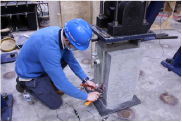
Assessment of Micropile-Supported Integral Abutment Bridges PHASE 2: Flexural Strength and Durability of Micropile Threaded Connections Project 3.11 Project Summary Integral abutment bridges (IABs) are the preferred method of construction by Maine Department of Transportation (DOT) and other transportation agencies throughout the United States due to their durability and reduced upfront and life-cycle costs. Shallow […]

Read more
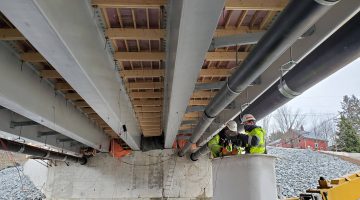
Project 3.12 Cover Image, areal view of bridge

Project 3.12: Lateral loading of unreinforced rigid elements and basal stability of column-supported systems

Lateral Loading of Unreinforced Rigid Elements and Basal Stability of Column-Supported Systems Project 3.12 Project Summary The use of rigid column-support to stabilize fill embankments and MSE walls continues to grow in popularity, especially among DOTs and transportation agencies for roadway, railway, and bridge applications because of its distinct advantage in accelerating construction in fill […]

Read more
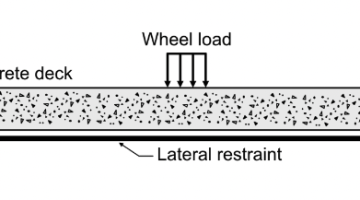
Project 3.13: Investigating the Effectiveness of Enzymatic Stabilizers for Reclaimed Stabilized

Base Projects Investigating the Effectiveness of Enzymatic Stabilizers for Reclaimed StabilizedBase Projects Project 3.13 Project Summary The overarching goal of this project is to evaluate the effectiveness of enzymatic stabilizers in RSB projects in Vermont and the New England (NE) region. The outcomes of this project will assist engineers in (i) determining the appropriate enzymatic […]

Read more

3.14 cover image

Project 3.14: FRP-Concrete Hybrid Composite Girder Systems: Web Shear Strength and Design Guide Development

FRP-Concrete Hybrid Composite Girder Systems: Web Shear Strength and Design Guide Development Project 3.14 Project Summary UMaine recently developed and commercialized, in partnership with AIT Bridges, a novel, fiber-reinforced polymer (FRP) composite bridge girder. This project will assess the shear strength of foam-core webs of the girders using a combined experimental and analytical approach. Data […]

Read more
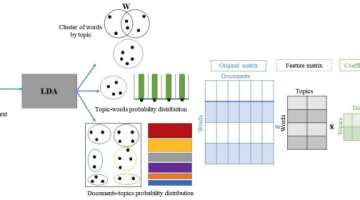
3.15 cover image
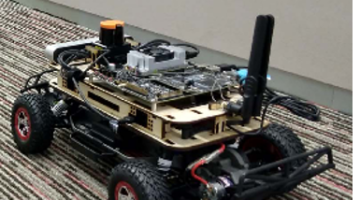
Project 3.15: Nonstructural approaches to reduce sediment and pollutant runoff from transportation

Nonstructural Approaches to Reduce Sediment and Pollutant Runoff from Transportation Infrastructure in Urbanized Areas Project 3.15 Project Summary Stormwater management is a critical component of transportation infrastructure and reduces sediments and pollutants delivered to waterways. The primary goal of this proposed study is to assess the performance and cost-benefit of including enhanced street cleaning program […]

Read more

3.16 cover image

Project 3.16: CT bridge girder sections with precast decks and FRP girder-deck shear

CT Bridge Girder Sections with Precast Decks and FRP Girder-Deck ShearConnectors Project 3.16 Project Summary UMaine recently developed and commercialized, in partnership with AIT Bridges, a novel, fiber‐reinforced polymer (FRP) composite bridge girder. This project focuses on the assessment of the fiber‐reinforced polymer tub girder (CT girder) with precast concrete decks and new, FRP girder‐deck […]

Read more

sensor placement under grist mill bridge

Project 3.17: Assessment of CT Girder Load Distribution and Web Buckling Through Field Load Testing and Finite-Element Analysis

Assessment of CT Girder Load Distribution and Web Buckling Through Field Load Testing and Finite-Element Analysis Project 3.17: Field Live Load Testing and Advanced Analysis of Concrete T-Beam Bridges to Extend Service Life Project Summary Recent and ongoing research has highlighted the need to better understand and quantify web shear capacity as well as the […]

Read more

3.18 cover image of a diagram showing test method of concrete deck

Project 3.18: Steel-Free Concrete Bridge Decks

Steel-Free Concrete Bridge Decks Project 3.18: Project Summary In order to realize a potentially transformational improvement in concrete bridge deck durability, the proposed research program intends to validate a deck design by which little to no conventional reinforcement is required. The design relies on the development of so-called arching action to maintain compressive stresses in […]

Read more

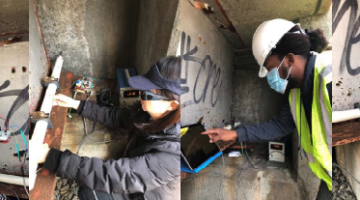
Worker holding a sensor to a bridge column

Project 3.19: Detection and Monitoring of Material Aging and Structural Deterioration using Electromagnetic and Mechanical Sensors with Virtual Reality and Machine Learning Modeling

Detection and Monitoring of Material Aging and Structural Deterioration using Electromagnetic and Mechanical Sensors with Virtual Reality and Machine Learning Modeling Project 3.19 Project Summary The problem we are trying to solve is the detection and monitoring of aging civil infrastructure components and systems in New England by using visual information and subsurface images in […]

Read more

Project 3.20: Analysis of MaineDOT Road and Bridge Infrastructure Construction Costs

Analysis of MaineDOT Road and Bridge Infrastructure Construction Costs Project 3.20 Project Summary Maine Department of Transportation (MaineDOT) has been experiencing increasing costs in bids received for bridge repair, road paving and other infrastructure construction projects. This was first observed for bridges in the Fall of 2018 and paving in the spring 2019. Moreover, for […]

Read more

Project 3.21: GBeam Bridge Girder Pultrusion: Section Design and Optimization

GBeam Bridge Girder Pultrusion: Section Design and Optimization Project 3.21 Project Summary The GBeam girder system, recently developed by the University of Maine (Dagher et al. 2019; Davids et al. 2022a; Davids et al. 2022b), holds significant promise for widespread application in conventional, slab-on-girder bridges. Its successful initial implementation is driven by enhanced durability, low […]

Read more

Project 4.01 cover image, info graphic showing different modes of transportation connected through signals

Project 4.01: Connected Vehicles Applications to Improve Infrastructure Safety and Durability

Connected Vehicles Applications to Improve Infrastructure Safety and Durability Project 4.01 Project Summary This project will identify opportunities and vulnerabilities for enhanced connectivity of transportation infrastructure in Maine and New England. The project will consider how these technologies will improve the durability of infrastructure and improve safety and efficiency for road users. The project will […]

Read more

4.02 cover image

Project 4.02: Future-Proof Transportation Infrastructure through Proactive, Intelligent, and Public-involved Planning and Management

Future-Proof Transportation Infrastructure through Proactive, Intelligent, and Public-involved Planning and Management Project 4.02 Project Summary The objective of this study is to future-proof transportation infrastructure (e.g., highways, railways, and bridges) through proactive, intelligent, and public-involved planning and management so that they can prepare appropriately, minimize impact, and capitalize opportunities in the face of future events, […]

Read more

4.03 cover image, image of small robotic car

Project 4.03: Towards Quantitative Cybersecurity Risk Assessment in Transportation Infrastructure

Towards Quantitative Cybersecurity Risk Assessment in Transportation Infrastructure Project 4.03 Project Summary This research project aims to design a systematic and quantitative framework to explore the connectivity and security issues in representative transportation infrastructures, including low-power wireless network infrastructure mainly for long-term structural monitoring, and vehicle-to- everything (V2X) communication infrastructure for vehicle-to-vehicle and vehicle-to-infrastructure message […]

Read more

Project 4.04: Bridge-stream network assessment to identify sensitive structural, hydraulic

Bridge-Stream Network Assessment to Identify Sensitive Structural, Hydraulic and Landscape Parameters for Planning Flood Mitigation Project 4.4 Project Summary Bridge rehabilitation or new bridge design is often performed as needed for individual bridges without much consideration for how the change affects other bridges, properties, roads, etc. This is often a concern raised by stakeholders when […]

Read more

4.07 cover image

Project 4.07: Integrated Green Infrastructure for Sustainable Transportation Planning

Integrated Green Infrastructure for Sustainable Transportation Planning Project 4.7 Project Summary Study of impacts of the use of green infrastructure to see if there is potential to identify parameters that help extend the life of gray transportation infrastructure. Principal Investigator:Dr. Christopher Hunter Institution:University of Rhode Island Co-PIs:Dr. Farhad Atash Project:Terminated Start Date:07/01/2019 End Date:06/30/2020 Project […]

Read more

Project 4.09: Analysis of Covid-19 and Travel In Maine (ACTIME) Validation Study

Analysis of Covid-19 and Travel In Maine (ACTIME) Validation Study Project 4.9 Project Summary The project will support Maine DOT by validating the accuracy of Streetlight Insight® Metrics AADT data using data collected at permanent and temporary count stations in Maine. We are investigating the accuracy of seasonal (monthly), daily and hourly variations in AADT […]

Read more

4.10 cover image. Map of Maine sectioned into different regions

Project 4.10: Road Salt Impact Assessment (Safety Study)

Road Salt Impact Assessment (Safety Study) Project 4.10 Project Summary The proposed study supports a project sponsored by Maine DOT titled as “Road Salt Impact Assessment.” Winter weather and maintenance treatments have significant impact on highway safety and operations. Understanding the safety impact of these factors directly influence decisions on diminishing maintenance funds, and cost-benefit […]

Read more

Project 4.11: Safety Assessment of New England Roadways during the COVID-19 Pandemic

Safety Assessment of New England Roadways during the COVID-19 Pandemic Project 4.11 Project Summary Safety assessment of roadway facilities is a critical task to maintain the system operational efficiency of transportation infrastructure. The comprehensive stay-at-home orders implemented in response to the COVID-19 pandemic have resulted in massive reductions in traffic volumes, especially on major highways. […]

Read more

4.12 cover image

Project 4.12: Proactive and Intelligent Risk Management in Complex Civil Infrastructure

Proactive and Intelligent Risk Management in Complex Civil Infrastructure Project Systems Project 4.12 Project Summary The construction of complex civil infrastructure projects, such as major transportation expansion and rehabilitation, usually faces various types of risks and uncertainties. If not managed properly, these risks and uncertainties bring significant negative impacts on project performance, causing schedule delays […]

Read more

Project 4.13 Cover Image, ven diagram with three circles labled enviornment, economy and society that overlap to create sustainability.

Project 4.13: Development and Application of a Cost-Benefit Tool for Quantifying External Social Impacts of Small to Mid-Size Transportation Projects

Development and Application of a Cost-Benefit Tool for Quantifying External Social Impacts of Small to Mid-Size Transportation Projects Project 4.13 Project Summary This two-year project will focus on developing methods for quantifying the external social costs of transportation civil infrastructure projects, particularly small to mid-size projects that are common in New England states. Transportation projects […]

Read more

Project 4.14: Electric Vehicle Infrastructure Equity

Electric Vehicle Infrastructure Equity Project 4.14 Project Summary Electric vehicles (EVs) have evolved rapidly owing to technological advancements and a growing interest in renewable energy to eliminate transportation’s dependency on fossil fuels and mitigate the effects of climate change over the next decades. Despite the many benefits they bring, EVs could exacerbate inequality due to […]

Read more

Project 4.16: Investigating the Long-Term Durability of CFRP Repairs for Bridges Under Environmental Conditions

Investigating the Long-Term Durability of CFRP Repairs for Bridges Under Environmental Conditions Project 4.16 Project Summary Carbon fiber-reinforced polymers (CFRP) have been widely used for bridge repair and strengthening because of their high strength-to-weight ratio, corrosion resistance, and ease of installation. However, the long-term durability of CFRP repairs under harsh environmental conditions remains unclear. Accumulated […]

Read more

C3.2018 cover image sensors connected to corrosion bath

Project C03.2018: Condition Assessment of Corroded Prestressed Concrete Bridge Girders

Condition Assessment of Corroded Prestressed Concrete Bridge Girders Project C3.2018 Project Summary The problem we are trying to solve is the condition assessment of corroded prestressed concrete (PC) bridge girders in New England. The problem is important because that PC bridge girders are a critical component of highway bridges. Concrete spalling and prestressing strand corrosion […]

Read more

c5.2018 cover image

Project C05.2018: Leveraging High-Resolution LiDAR and Stream Geomorphic Assessment Datasetsto Expand Regional Hydraulic Geometry Curves for Vermont: A Blueprint for NewEngland States

Leveraging High-Resolution LiDAR and Stream Geomorphic Assessment Datasets to Expand Regional Hydraulic Geometry Curves for Vermont: A Blueprint for New England States Project C5.2018 Project Summary Regional hydraulic geometry curves (RHGCs) for Vermont have been updated through development of additional observations and use of newly-available high-resolution lidar and stream geomorphic assessment data to improve the […]

Read more

Project C07.2018: Alternative Cementitious Materials (ACMs) For Durable and Sustainable Transportation Infrastructures

Alternative Cementitious Materials (ACMs) For Durable and Sustainable Transportation Infrastructures Project C7.2018 Project Summary Concrete produced with Alternative Cementitious Materials (ACMs) often exhibits superior mechanical performances and lower carbon footprint compared to those produced with Ordinary Portland Cement (OPC). ACMs also allow utilizing high-volume of industrial by-products as the binding materials instead of OPC, thus […]

Read more

Line graph titled 'Design and Final Gamma Distributions'

Project C09.2019: A New Method of Determining Payment for In-Place Concrete with Double- Bounded Compressive Strength Pay Factors

A New Method of Determining Payment for In-Place Concrete with Double-Bounded Compressive Strength Pay Factors Project C9.2019 Project Summary The Vermont Agency of Transportation (VTrans) currently uses a lower acceptance limit on 28-day concrete compressive strength (CCS) of 4,000 psi for acceptance of in-place concrete in its construction projects. Over time, to mitigate risk, the […]

Read more

C11.2019 cover image, UMass workers inspecting bridge girders

Project C11.2019: Development of a system-level distributed sensing technique for long- term monitoring of concrete and composite bridges

Development of a System-level Distributed Sensing Technique for Long-Term Monitoring of Concrete and Composite Bridges Project C11.2019 Project Summary The problem we are trying to solve is the long-term monitoring problem of bridges (e.g., concrete and composite bridges), using multiple modes of sensing technology including distributed fiber optic, video motion, conventional strain gauge, and electromagnetic […]

Read more

Large metal helical pile sitting on a pallet

Project C17:2020: Durability of Modified Helical Piles Under Lateral and Torsional Loads: Embracing Efficient Foundation Alternatives to Support Lightweight Transportation Structures

Durability of Modified Helical Piles Under Lateral and Torsional Loads: Embracing Efficient Foundation Alternatives to Support Lightweight Transportation Structures Project C17.2020 Project Summary Modified helical (i.e. screw) piles are lightweight deep foundation elements that are screwed into the ground and efficiently generate geotechnical compressive and uplift resistance by mobilizing the shear strength of soil adjacent […]

Read more

c19.2020 cover image showing satellite image of buildings and parking lots next to river that is shown with thermal imaging

Project C19.2020: Damage Modeling, Monitoring, and Assessment of Bridge Scour and Water Borne Debris Effects for Enhanced Structural Life

Damage Modeling, Monitoring, and Assessment of Bridge Scour and Water Borne Debris Effect for Enhanced Structural Life Project C19.2020 Project Summary The objective of this project is to evaluate bridge failure risk due to bridge scour and waterborne debris impacts to enable predictive management for enhanced structural life. The proposed multi-disciplinary project will establish a […]

Read more

c20.2020 cover image

Project C20.2020: Advanced Sensing Technologies for Practical UAV-Based Condition Assessment

Advanced Sensing Technologies for Practical UAV-Based Condition Assessment Project C20.2020 Project Summary The problem we are trying to investigate is the synergistic application of unmanned aerial vehicles (UAVs) with active acoustic sensing (AAS) and synthetic aperture radar (SAR) for the underside inspection of bridge decks. The problem is important because that employing such UAV-AAS-SAR system […]

Read more

Project C21.2022: Prediction and Prevention of Bridge Performance Degradation due to Corrosion, Material Loss, and Micro-structural Changes.

Prediction and Prevention of Bridge Performance Degradation due to Corrosion, Material Loss, and Micro-structural Changes Project C21.2022 Project Summary The proposed research merges a materials science and engineering approach to corrosion science with structural engineering approaches to bridge inspection and assessment to generate and implement a corrosion prediction model for bridge inspection and asset management […]

Read more