Alternative Structural Systems

Large metal helical pile sitting on a pallet

Project C17:2020: Durability of Modified Helical Piles Under Lateral and Torsional Loads: Embracing Efficient Foundation Alternatives to Support Lightweight Transportation Structures

Durability of Modified Helical Piles Under Lateral and Torsional Loads: Embracing Efficient Foundation Alternatives to Support Lightweight Transportation Structures Project C17.2020 Project Summary Modified helical (i.e. screw) piles are lightweight deep foundation elements that are screwed into the ground and efficiently generate geotechnical compressive and uplift resistance by mobilizing the shear strength of soil adjacent […]

Read more

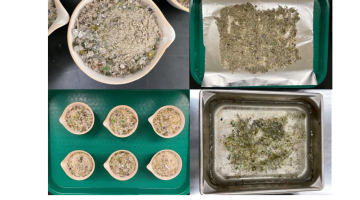
Project 3.13: Investigating the Effectiveness of Enzymatic Stabilizers for Reclaimed Stabilized Base Projects

Investigating the Effectiveness of Enzymatic Stabilizers for Reclaimed StabilizedBase Projects Project 3.13 Project Summary The overarching goal of this project is to evaluate the effectiveness of enzymatic stabilizers in RSB projects in Vermont and the New England (NE) region. The outcomes of this project will assist engineers in (i) determining the appropriate enzymatic agent for […]

Read more

2.12 cover image

Project 2.12: Evaluation of Processed Glass Aggregate for Utilization in Transportation Projects as A Sand Burrow.

Evaluation of Processed Glass Aggregate for Utilization in Transportation Projects as A Sand Burrow. Project 2.12 Project Summary “Sand borrow” is a sand-like material most commonly used as a subbase under pavements. To provide good drainage and protect the pavement from frost heaves, the sand borrow material is required to have a low content of […]

Read more

2.13 cover image

Project 2.13: Performance Structural Concrete Optimized for Cost, Durability and Manufacturability

Performance Structural Concrete Optimized for Cost, Durability and Manufacturability Project 2.13 Project Summary The primary goal is to develop prescriptive concrete mix designs that meet modern high- performance durability requirements while being practical to manufacture with New England-sourced materials and suppliers. These new Performance Concrete or High Performance Concrete (HPC) mix designs use graded aggregates, […]

Read more

3.14 cover image

Project 3.14: FRP-Concrete Hybrid Composite Girder Systems: Web Shear Strength and Design Guide Development

FRP-Concrete Hybrid Composite Girder Systems: Web Shear Strength and Design Guide Development Project 3.14 Project Summary UMaine recently developed and commercialized, in partnership with AIT Bridges, a novel, fiber-reinforced polymer (FRP) composite bridge girder. This project will assess the shear strength of foam-core webs of the girders using a combined experimental and analytical approach. Data […]

Read more

3.11 cover image

Project 3.11: Assessment of Micropile-Supported Integral Abutment Bridges

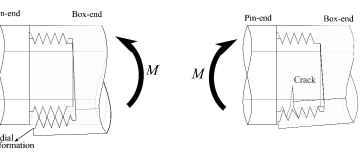
Assessment of Micropile-Supported Integral Abutment Bridges PHASE 2: Flexural Strength and Durability of Micropile Threaded Connections Project 3.11 Project Summary Integral abutment bridges (IABs) are the preferred method of construction by Maine Department of Transportation (DOT) and other transportation agencies throughout the United States due to their durability and reduced upfront and life-cycle costs. Shallow […]

Read more

Image of Penobscot Narrows suspension bridge

Project 2.10: Durability Evaluation of Carbon Fiber Composite Strands in Highway Bridges

Durability Evaluation of Carbon Fiber Composite Strands in Highway Bridges Project 2.10 Project Summary The objectives of this project are to monitor the structural performance of carbon fiber composite cable (CFCC) strands in the Penobscot Narrows Bridge, a cable-stayed bridge, to evaluate long-term durability, and to assess durability of carbon fiber reinforced polymer (CFRP) strands […]

Read more

Project 3.12 Cover Image, areal view of bridge

Project 3.12: Lateral loading of unreinforced rigid elements and basal stability of column-supported systems

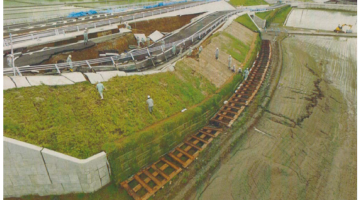
Lateral Loading of Unreinforced Rigid Elements and Basal Stability of Column-Supported Systems Project 3.12 Project Summary The use of rigid column-support to stabilize fill embankments and MSE walls continues to grow in popularity, especially among DOTs and transportation agencies for roadway, railway, and bridge applications because of its distinct advantage in accelerating construction in fill […]

Read more