University of Vermont

Project 1.20: Monitoring Rail Bed Infrastructure Using Wireless Passive Sensing

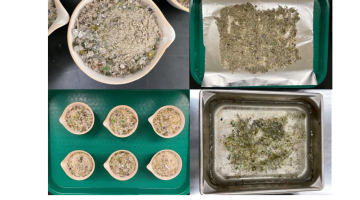
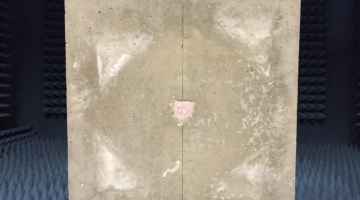
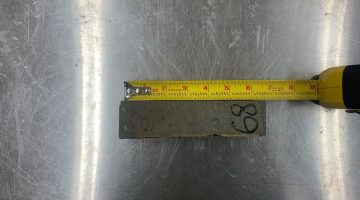
Monitoring Rail Bed Infrastructure Using Wireless Passive Sensing Project 1.20 Project Summary Assessment and monitoring the performance and health of rail structures is an essential aspect of prioritizing the repair and replacement, as well as extending service life, of these transportation infrastructures. Intrusion of fines from the subgrade or surface leads to ballast fouling and […]

Read more
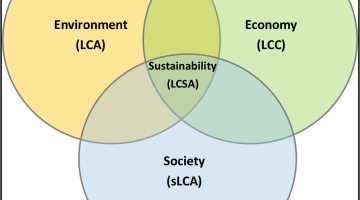
Project 4.13 Cover Image, ven diagram with three circles labled enviornment, economy and society that overlap to create sustainability.

Project 4.13: Development and Application of a Cost-Benefit Tool for Quantifying External Social Impacts of Small to Mid-Size Transportation Projects

Development and Application of a Cost-Benefit Tool for Quantifying External Social Impacts of Small to Mid-Size Transportation Projects Project 4.13 Project Summary This two-year project will focus on developing methods for quantifying the external social costs of transportation civil infrastructure projects, particularly small to mid-size projects that are common in New England states. Transportation projects […]

Read more

Project 3.13: Investigating the Effectiveness of Enzymatic Stabilizers for Reclaimed Stabilized

Base Projects Investigating the Effectiveness of Enzymatic Stabilizers for Reclaimed StabilizedBase Projects Project 3.13 Project Summary The overarching goal of this project is to evaluate the effectiveness of enzymatic stabilizers in RSB projects in Vermont and the New England (NE) region. The outcomes of this project will assist engineers in (i) determining the appropriate enzymatic […]

Read more

2.13 cover image

Project 2.13: Performance Structural Concrete Optimized for Cost, Durability and Manufacturability

Performance Structural Concrete Optimized for Cost, Durability and Manufacturability Project 2.13 Project Summary The primary goal is to develop prescriptive concrete mix designs that meet modern high- performance durability requirements while being practical to manufacture with New England-sourced materials and suppliers. These new Performance Concrete or High Performance Concrete (HPC) mix designs use graded aggregates, […]

Read more

c20.2020 cover image

Project C20.2020: Advanced Sensing Technologies for Practical UAV-Based Condition Assessment

Advanced Sensing Technologies for Practical UAV-Based Condition Assessment Project C20.2020 Project Summary The problem we are trying to investigate is the synergistic application of unmanned aerial vehicles (UAVs) with active acoustic sensing (AAS) and synthetic aperture radar (SAR) for the underside inspection of bridge decks. The problem is important because that employing such UAV-AAS-SAR system […]

Read more

Line graph titled 'Design and Final Gamma Distributions'

Project C09.2019: A New Method of Determining Payment for In-Place Concrete with Double- Bounded Compressive Strength Pay Factors

A New Method of Determining Payment for In-Place Concrete with Double-Bounded Compressive Strength Pay Factors Project C9.2019 Project Summary The Vermont Agency of Transportation (VTrans) currently uses a lower acceptance limit on 28-day concrete compressive strength (CCS) of 4,000 psi for acceptance of in-place concrete in its construction projects. Over time, to mitigate risk, the […]

Read more

c5.2018 cover image

Project C05.2018: Leveraging High-Resolution LiDAR and Stream Geomorphic Assessment Datasetsto Expand Regional Hydraulic Geometry Curves for Vermont: A Blueprint for NewEngland States

Leveraging High-Resolution LiDAR and Stream Geomorphic Assessment Datasets to Expand Regional Hydraulic Geometry Curves for Vermont: A Blueprint for New England States Project C5.2018 Project Summary Regional hydraulic geometry curves (RHGCs) for Vermont have been updated through development of additional observations and use of newly-available high-resolution lidar and stream geomorphic assessment data to improve the […]

Read more

2.07 cover image

Project 2.07: High Performance Concrete with Post-Tensioning Shrinking Fibers

High Performance Concrete with Post-Tensioning Shrinking Fibers Project 2.7 Project Summary This research improves upon the technique of reinforcing concrete with dispersed fibers by having the fibers axially shrink after curing to produce a dispersed multi-axial post-tensioned state. Such reinforcing may increase the crack resistance and durability of the concrete. Preliminary benchtop testing with natural […]

Read more

Project 2.03: Measuring Adhesion Between Binders and Aggregates Using Particle Probe Scanning Force Microscopy at Low Temperatures

Measuring Adhesion Between Binders and Aggregates Using Particle Probe Scanning Force Microscopy at Low Temperatures Project 2.3 Project Summary Low temperature cracking is one primary distress of pavement materials in New England area. It is estimated that only half of the major US roads are in good condition, whereas thirteen percent are in poor condition. […]

Read more